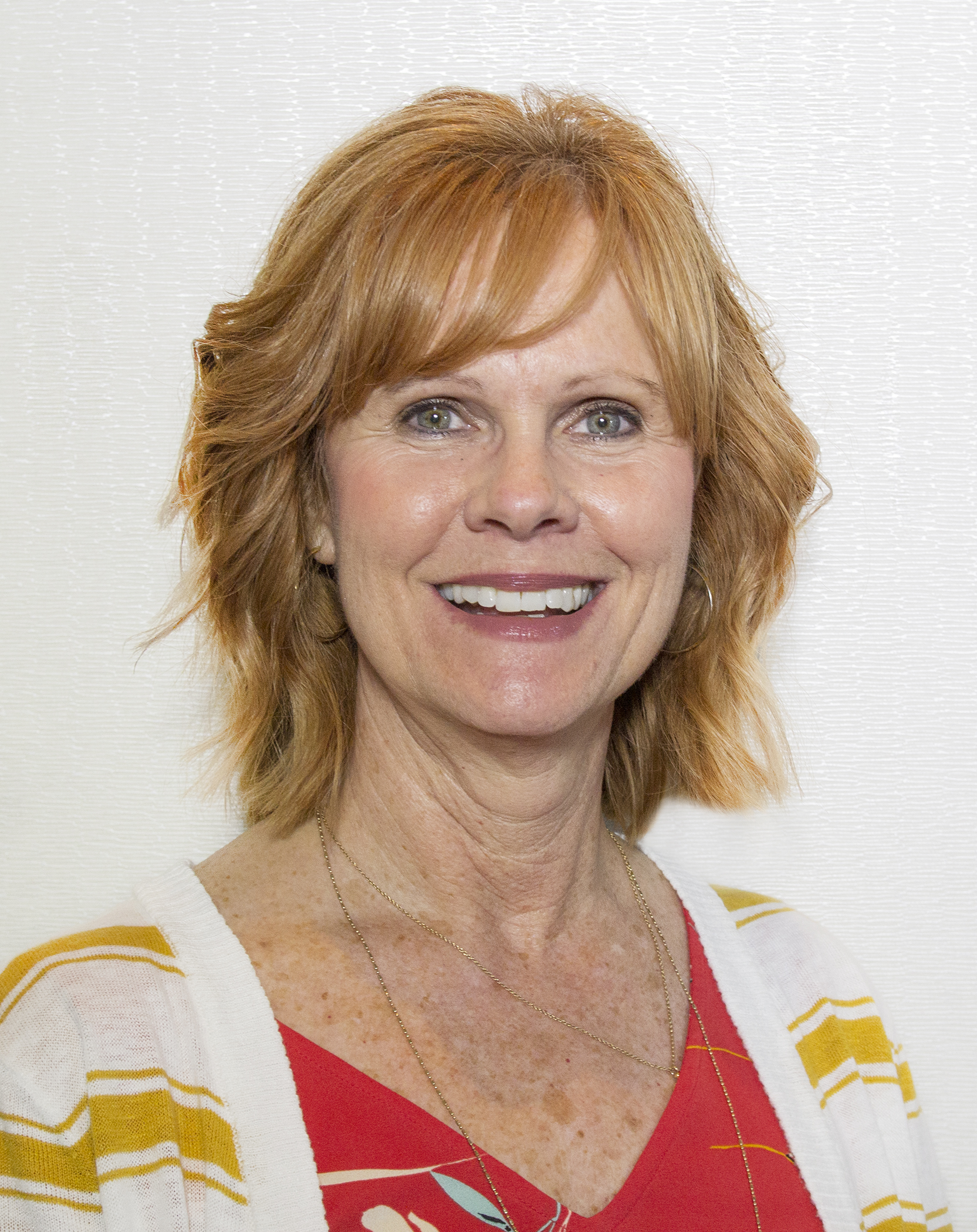
We’ve been talking about the technical aspects of writing, the multiple drafts a story requires, the careful language choices you make, the editing and grammar checks, when Erika Fink does something that often happens in discussions of literacy. She tells a story.
Fink grew up in Singapore and emphasizes how important literacy is in a foreign country: reading road signs, understanding rules, deciphering language, and all those things that are important when you are navigating a different world. She begins, “I remember listening to my dad, and he’d read to us. You know, Treasure Island, some of those chapter books. And we were 7 kids, so at night he’d lie down on the bed, and we’d all sit around and he’d read those chapter books. I remember those connections related to literacy and reading that were so important.” The story segues into a discussion of her mother’s command of Chinese, which leads to another story of a Chinese friend’s family, who think that literacy is simply learning to read.
What Fink describes is part of the complexity of literacy generally and family literacy particularly. Her story is about so much more than reading: The children listen and thus develop that skill; They learn new words and information; They develop the skills of sitting quietly and being attentive; and They form lasting bonds with each other as siblings and with their father. Listen again to what she says, “I remember those connections related to literacy.”
In listening to Fink, I’m struck by this idea of connection, that so often literacy begins with an origin story where a family member, a friend, a teacher, a librarian, introduces the world of words in all its connotations. Literacy then is about the connections we make in sharing content that is meaningful to us. And these connections are something we often carry with us our entire lives.
Which leads me to why I’m talking to Fink. She is a part of a recent Nebraska Growing Readers (NGR) Writers Workshop held for Sixpence home visitors and staff, Rooted in Relationships coaches, and other early childhood partners. NGR, which is a Nebraska Children and Families Foundation initiative, holds these workshops to encourage the production of local content that will be meaningful to the state’s children, families, and communities.
Fink works in ESU 1 as the Nebraska Department of Education Early Learning Coordinator for 16 counties in the northern part of the state and heard of the Writers Workshop from a colleague who knew Fink wanted to write children’s books. In fact, Fink had already received a grant to attend writing seminars and receive coaching in order to write a book that her husband illustrated. She is currently working on an NGR book about her rescue dog Harvey. She says of NGR books, “I really like the personal touches of the stories. Some are about the communities in Nebraska or the families.” Fink sees the writing she and others in the workshops are doing as service to the community, a giving back with the strengths that you have, as she describes it.
Molly Rosenberg, who came to the workshop in her role as Rooted in Relationships Community Technical Assistant and Project Coordinator for Saline, Lincoln, and Buffalo Counties, epitomizes the intersection of personal and community, of building relationships through literacy. She became interested in the workshop, in part, because her daughter had received NGR books through the Incoming Kindergartener program. When she thought about the delight her daughter took in the weekly delivery of books, she saw an opportunity to create an even deeper literacy bond.
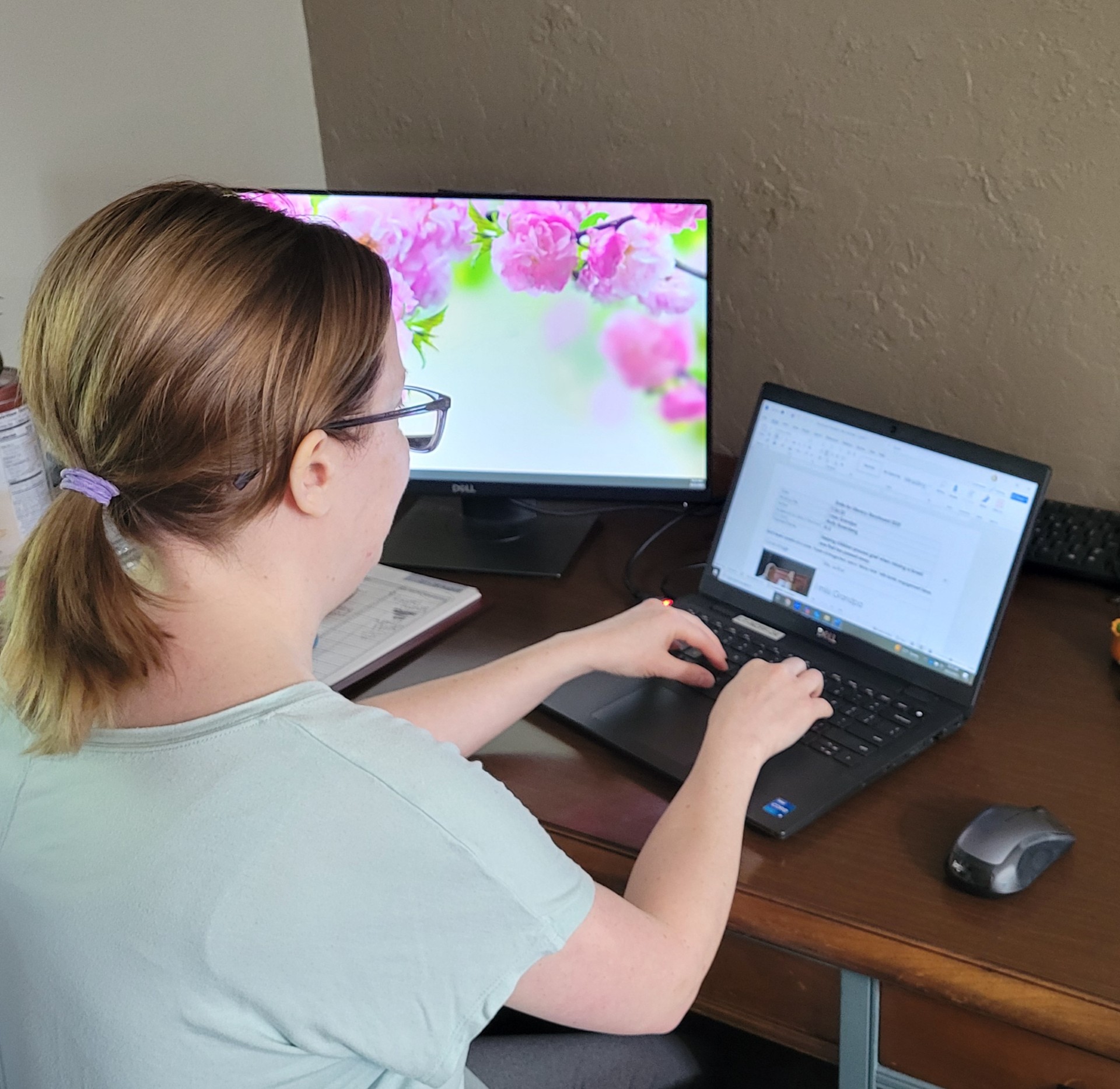
She explains that she used to sit in her room as a child and write books, and once she “became a mother and had her own children, I see how they share that love of books, and I thought it would be really cool to write a children’s book they could see themselves in.” She made the writing a family process in which her kids helped her come up with ideas and, with their help, she drafted five different book projects.
It was, however, a personal and painful occurrence that expanded the writing process beyond her family. When Molly recently lost her father, she decided to write a book about helping children through the grieving process. She called this book her most impactful, saying, “I think it could help a lot of kids. I think a lot of parents don’t know how to navigate that grief process with children.” The project thus translated a personal moment into a way for both family and community to learn from and connect through literacy.
Another member of the workshop, Susan Johnson, who has worked for Sixpence for 15 years and is Director in Falls City, emphasizes literacy connections and service to community in a slightly different way. She says, “from the get-go, when parents first find out that they’re pregnant, it (literacy) is so important. I just talked to a young mom the other day and said, ‘Read to your child, sing to your child.’”
Johnson joined the workshop to find her own connection, to, as she put it, “learn more about writing and see if it’s a fit for me.” But she also sees literacy as a chance to make connections between community organizations and families. The home visitors and coaches under her direction model reading with children to the families they work with and instill in them “that they are the child’s first teacher.” She adds that the benefits go beyond the children, “We see so many adults that are struggling with reading, and some of these books that we give out help those parents to develop a skill they’re going to need their whole life.” Perhaps that’s why Johnson describes herself as so passionate about Sixpence. She sees the connections forged between families and children based on the work she does, a part of which is through literacy development. This is also why her Writers Workshop project is a book on Sixpence and what it does in coordination with the community.
All three women see the value of the workshops as a means of building literacy at the local level. Rosenberg “loves the approach of having books be localized so that kids can see themselves in the books or places or scenarios that are familiar.” She said the whole process was therapeutic for her and that she appreciated the intimacy of working in smaller groups where she received other perspectives of things she might have missed. Fink said she was reminded to “be a camera with words.” Thanks to the workshop, she has shifted from a more technical style to considering how the reader hears the words. Johnson said the workshop reduced her fears about writing and helped her think more about the nuances of words in context.
Ultimately, the NGR Writers Workshop has encouraged these local authors to develop their own personal connections with literacy and to share them with the local community and beyond in the hopes of building those lifelong bonds with reading, communication, thinking, and with those they love and admire. At the end of my conversation with Fink, she brought this whole idea full circle from the moment of her own early connection with literacy to a moment of passing that passion on. “I read to my grandchildren. I’ve been reading to them since they were babies—and it’s that emotional connection, reading.” She pauses for a moment, before continuing. “They’re all huge readers now. They talk about favorite books, and you ask why. They say because mom read it to me.” She stops and then repeats, “It’s that emotional connection.”
© 2025 Nebraska Children and Families Foundation. All rights reserved.

Nebraska Children’s mission is to create positive change for Nebraska’s children through community engagement.


 Growing the Good Life
Leave a comment