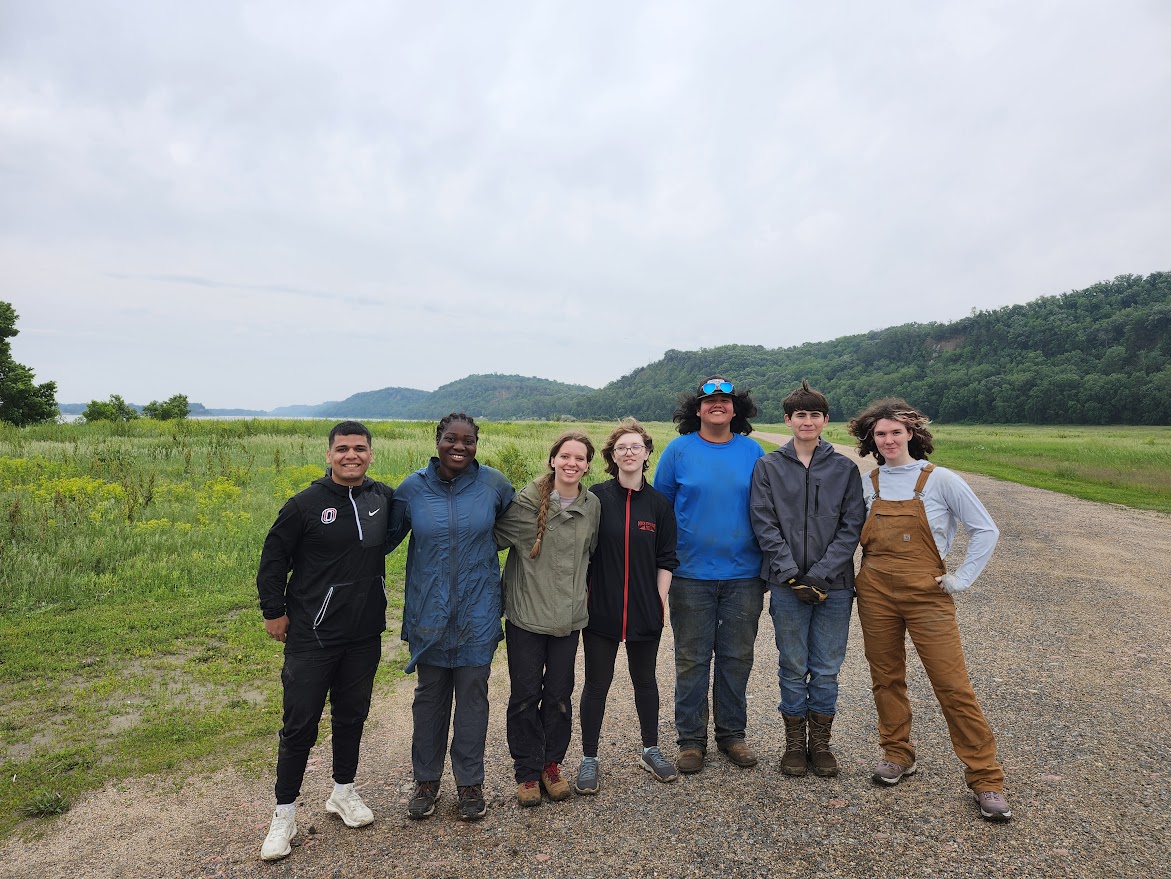
If you haven’t heard of the Battle of Scotts Bluff, it’s because it didn’t exist until very recently. And the first shot fired was an ABBA song. When a group of high school students involved in Beyond School Bells’ 2025 Conservation Internship exchanged opinions over a group chat on whether “Mamma Mia” was a good song, things got raucous, with messages flying back and forth in Shakespearean language. When they couldn’t settle their differences, they took to the battlefield. It was on the fields of the Bluff, with pool noodles in hand and a trusty toy steed, that they fought to bring clarity to the issue.
So what does this have to do with conservation?
Everything. Dakota Staggs, Assistant Vice President of Beyond School Bells (BSB), a Nebraska Children and Families Foundation initiative, explains that the purpose of the internship “has always been to introduce students to conservation careers and to Nebraska’s natural spaces to show the ecological and biological diversity.” But, as Stephanie Vadnais, another member of the BSB team put it, the best learning outcomes for after-school and summer programs often come when the students don’t even know they’re learning.
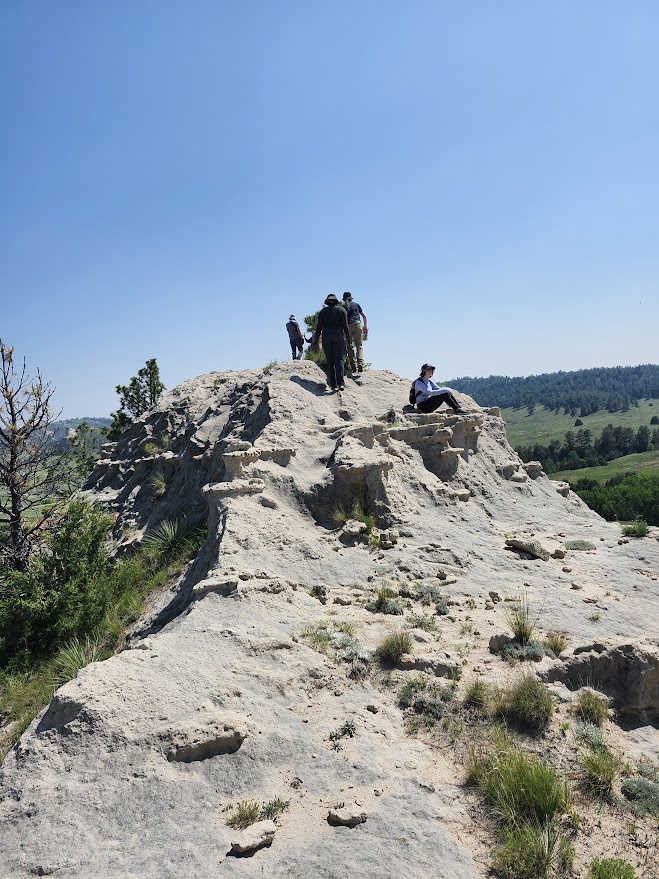
Samii Robey, a recent UNO graduate in environmental sciences, who acted as one of the mentors to the high school students on the trip, explained, “it’s about how we can make this fun, even when we’re working and learning.” She goes on to add, “if we can be out there and make them smile at any point during the day, it’s working for me.” And who wouldn’t smile at a pool noodle battle in the middle of one of Nebraska’s most unique landscapes?
The Conservation Management Internship began in 2017 and has since been an opportunity for students to learn more about conservation by hearing from professionals in the field and by engaging in hands-on service learning from identifying plants, trees, and invasive species in places like Gjerlof Prairie and Glacier Creek Preserve to seeing how undergraduate students do research at UNL’s Cedar Point Research Station. Staggs explains that the aim is twofold: first, they are exposed to career paths in conservation; and second, they get a glimpse of what college life could be like.
Staggs says the internship spans two weeks in which students focus on visiting many of Nebraska’s biologically unique landscapes, such as the oak forests near the Missouri River and the Wildcat Hills. There’s physical work, such as clearing trails and planting pollinator habitats; there’s learning about plant and bird identification, fire lines, and other prairie conservation techniques; and there’s fun breaks for things like archery, swimming, and, yes, epic battles.
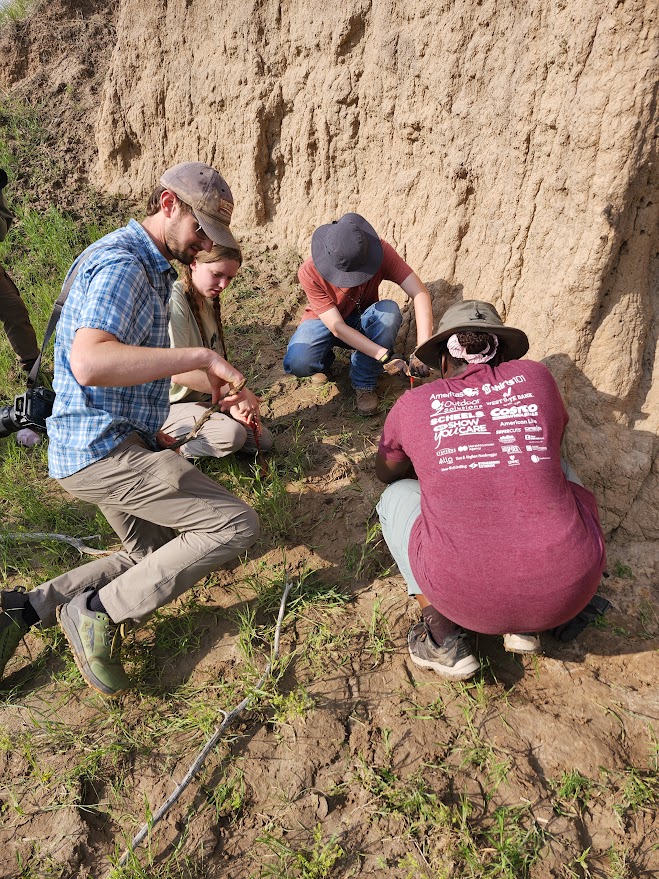
This year high school students from Scottsbluff, Ponca, Macy, and Lincoln joined with upper-level college students or graduates, who acted as guides and mentors, to spend the two weeks living, eating, learning, playing, and working together. Even things that seem like goofy kids’ moments like the Battle of Scotts Bluff (as the students deemed it) take on new light when you consider the novel experience of their own state the group is having. Staggs said, “the student from western Nebraska was surprised to see the forests of eastern Nebraska and the other students didn’t expect the bluffs or rock formations of western Nebraska.”
The experience, however, isn’t just about general ecological learning. Individual student interests are often incorporated into the internship. Alexus Hansen, BSB’s Environmental Education Specialist who works closely with the program, gives the example, “we had a student this year who was interested in fishing and his mentor went out of his way to find a way for him to fish.” The other students joined in and learned how to gut and skin fish, something, according to Hansen, they all really enjoyed.
Such a personal level of engagement leads to another aim of the internship, for the students to take what they’ve learned back to their communities. Last year, one student named BrieAnn took what she learned back to her community and helped lead a Walthill afterschool camping trip to Ponca State Park. This year Daniella Cole entered the internship with an idea in mind, gathered necessary skills and knowledge, and is returning to her community to try to implement her idea.
Cole is a student at Lincoln Northwest High School and learned about the Conservation Internship through the youth leadership program she was involved with. She didn’t know a lot about conservation, but she had heard talk of sustainability in one of the leadership meetings she’d attended. As she began to talk to her teachers, one mentioned a roof-top garden that didn’t see enough use among her peers at the school, so Daniella started hatching a plan. Her initial idea was to grow produce in the garden to use at lunch, but she quickly learned that not enough could be grown to feed the student population.
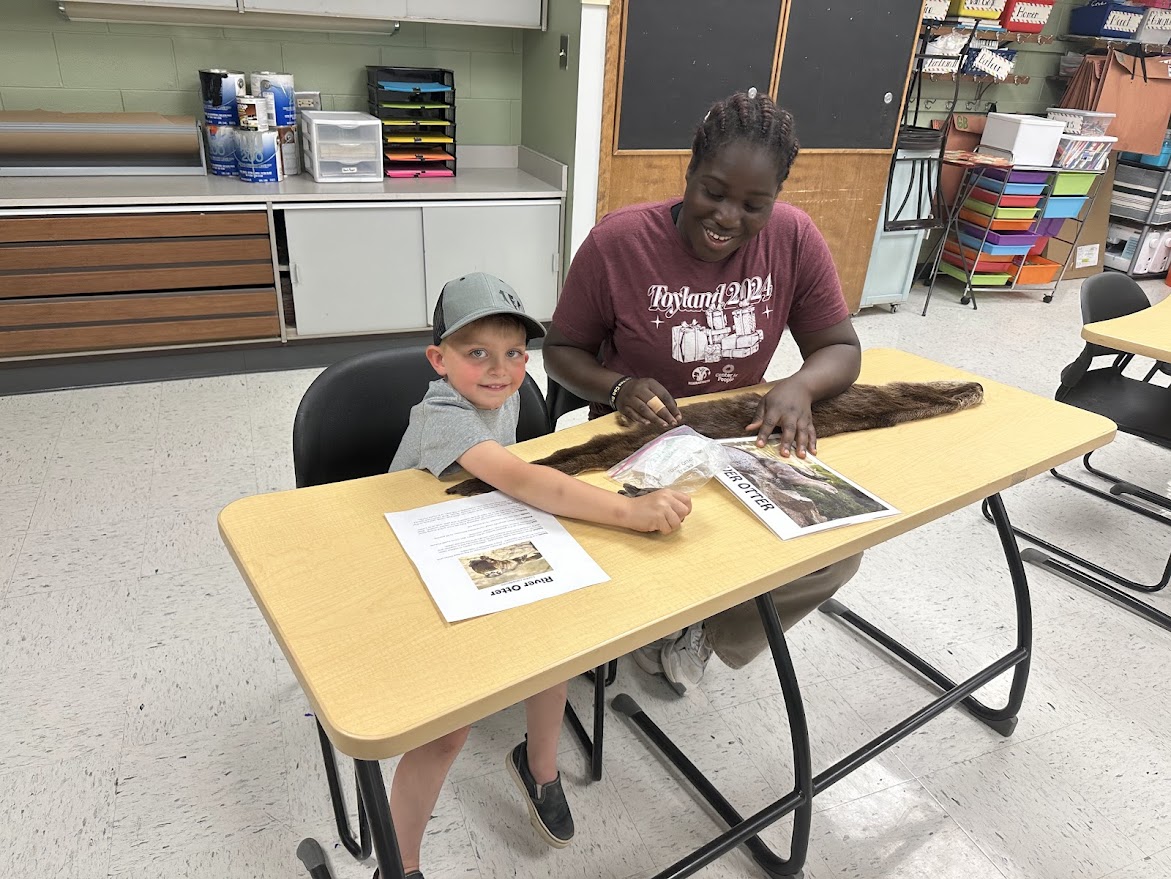
During the internship, the group visited a geothermic greenhouse in Aurora, and the presenter talked about donating any produce grown back to the community. Cole said, “it was really interesting, and I got her contact, so if I needed any help with my project, I could ask her about it.” She has since been in discussions with her teachers on how to make the roof-top a sort of community garden that could be part of an afterschool program.
Beyond her project, Cole said she hadn’t been involved in the outdoors much and so she saw the internship as an opportunity to learn more about Nebraska conservation. She said of the experience, “just being there with people who wanted to be involved was meaningful.” She watched some of her fellow interns who came in with other plans for the future change what they wanted to do because they loved what they were learning. Of her own experience, Cole said, “environmental issues used to not affect me much, but, doing this, I can see that our impact on the environment is a big deal. I grew a passion for that. I want to be involved with this; this is important.”
It wasn’t just the interns that gained from the experience. Robey said that after graduation, she had been “at a loss as to what direction to go, so this mentorship helped narrow down the options.” Part of this year’s itenerary included a day where the group visited a rural elementary school to teach the children about nature and wildlife. This and working with the interns had a significant impact on Robey as she is now considering conservation education as a career. She added that the conservation community is close knit, so just going and meeting professionals, learning their names was a great step toward her future plans.
It was the connections the group made with each other that gave the experience that special afterschool quality. Hansen met the students on the first and last day of the internship and noticed their connections with one another evolve. She noted, “on the first day, the students were so quiet when they got there, but by the time I met them at the end of the trip, they were all best friends.”
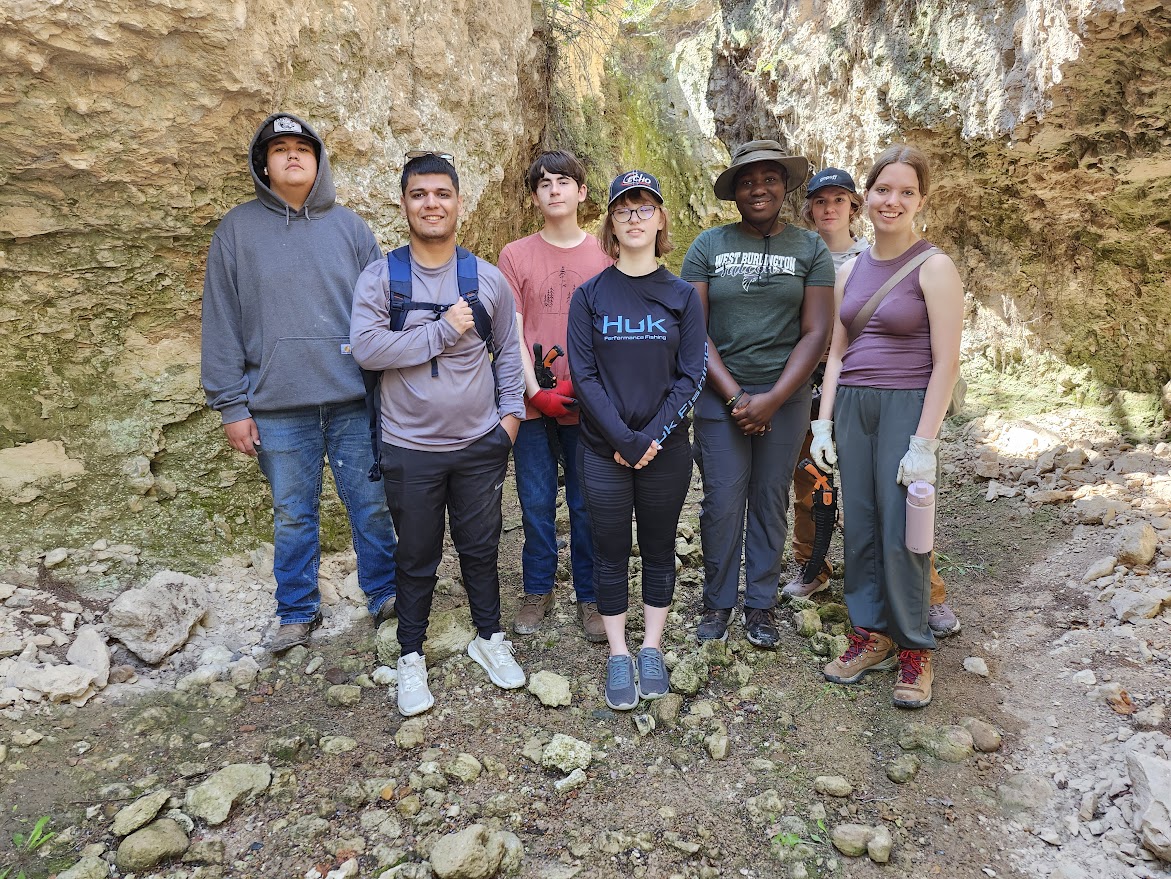
Robey said she loved learning along with the interns and had wonderful moments, such as when one student who knew little about the environment was able to identify a yarrow plant in the field. Cole said, “Samii (Robey) was like a mother to us, watching out for us. She really helped us understand stuff.”
The learning, the bonding, and the experiences were all made possible by funding provided by Nebraska Environmental Trust and other private funders. In addition, it took careful planning from Hansen and Staggs in coordination with conservation leaders across the state to make the eventful program happen. Students were able to stay on the UNO and Western Community College campuses, they worked with Ponca State Park, Prairie Plains Resource Institute, UNL’s Cedar Point Biological Station, the Ian Nicholson Audubon Center at Rowe Sanctuary, Crane Trust, Glacier Creek Preserve, Nebraska Wildlife Rehab, Fontenelle Forest, Meadowlark Hearth Organic Farm, North Platte Natural Resource District, and Bayard Elementary School, and they go back into their communities as conservation leaders.
As for the Battle of Scotts Bluff, not much was resolved. The boys still don’t think much of ABBA’s biggest hit, while the girls, perhaps, would offer, “heedest thou this advice, Mamma Mia tis, forsooth, a song most excellent.” And so they fight on with their virtual noodles as they spread what they’ve learned about Nebraska conservation to the communities from which they come.
To learn about Beyond School Bells’ efforts to bring quality summer and afterschool learning experiences to Nebraska communities, visit www.BeyondSchoolBells.org.
Beyond School Bells is a statewide public-private partnership that supports sustainable, high-quality, school-community collaborations that provide youth with what they need to succeed in school and life. These collaborations offer kids access to areas of learning they may never experience, including hands-on STEM (Science, Technology, Engineering, and Mathematics) activities. Participants exhibit increased school attendance, positive behavior, and improved academic performance.
© 2025 Nebraska Children and Families Foundation. All rights reserved.

Nebraska Children’s mission is to create positive change for Nebraska’s children through community engagement.


 Growing the Good Life
Leave a comment