
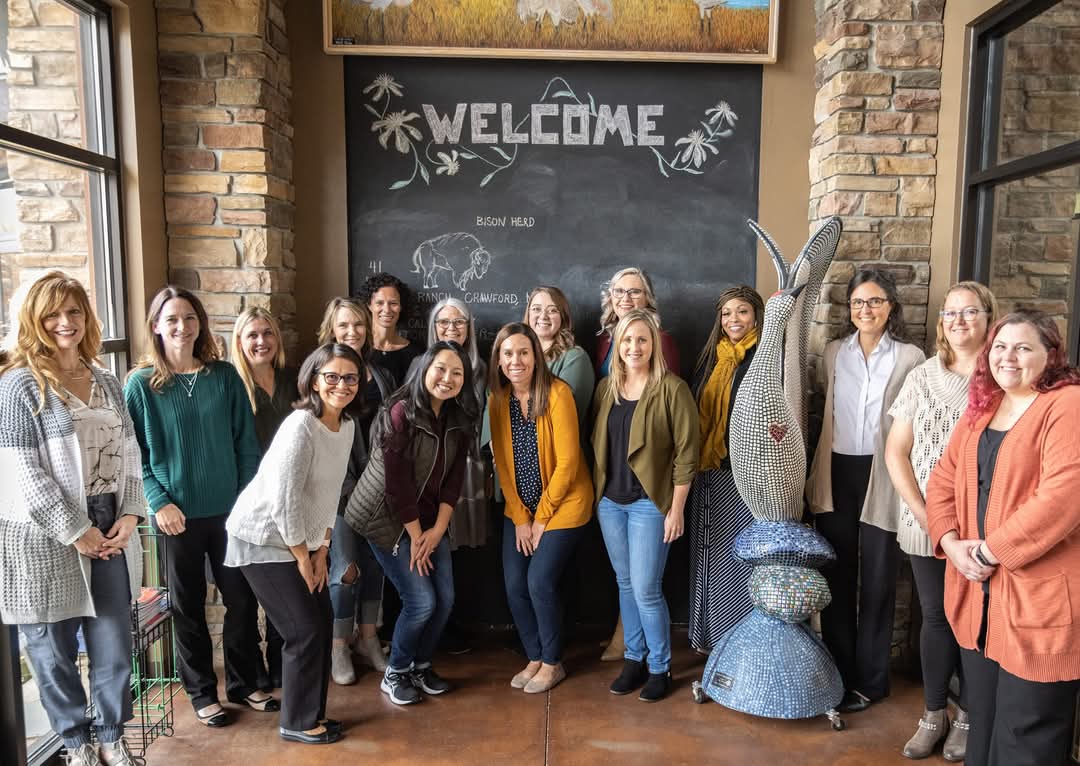
Sami Bradley hopes to address state policies concerning early childhood mental health (ECMH) in an effort to create a more integrated system in Nebraska, and it looks like she’ll have a very good chance to do that. Bradley, who is the head of Nebraska Children and Family Foundation’s Rooted in Relationships and the co-lead of the Nebraska Association of Infant Mental Health (NAIMH), will be a part of the statewide collaborative that has been invited to join the current cohort of Zero to Three’s Financing Policy Project for 2025.
The project provides technical assistance to chosen collaboratives “to identify and implement state strategies for aligning financing policy with IECMH best practice initiatives.” The Nebraska collaborative will have monthly meetings with a technical assistance provider, have access to subject matter experts, have the opportunity in March to attend an in-person convening where they will meet with state representatives from previous cohorts, and have access to a series of virtual peer learning opportunities.
The Nebraska collaborative is made up of what Bradley calls a group of “powerhouse” organizations, including NAIMH, the Nebraska Department of Education, the Department of Health and Human Services, Nebraska Head Start, First Five Nebraska, Sixpence, Rooted in Relationships, the Nebraska Resource Project for Vulnerable Young Children, Buffett Early Childhood Institute, University of Nebraska Lincoln—Youth and Family Studies, and private clinicians.
Before this group had even started the Financing Policy Project, work had begun on establishing the framework for building toward improved ECMH in the state. In December of 2024, roughly 20 state partners met to begin developing an ECMH-policy action plan for the next two years. Bradley says that the focus will be on expanding access to ECMH resources, financing for practitioners and support resources, aligning system resources, and elevating the ECMH field. To inform policy development, the group will begin data collection and look at specific data other states have collected that have proved useful in shaping policies similar to those that the Nebraska team hopes to draft.
Bradley emphasizes the need for sustainable funding for all ECMH levels who work in the state. She points to the significant training required for intervention therapists, who often face reimbursement challenges, and the crucial role of child care and home visitors. Bradley believes that policy focused on building infrastructure to equip early care professionals with training and resources will empower them statewide. She asserts, “Investing in foundational supports for our early care workforce will cultivate skilled providers, enhancing care and reducing the future need for intensive interventions.”
Mark Hald, a practicing child psychologist since 2000, supports Bradley when he says, “helping families have good high-quality child care is a big part of this.” Hald acts on the team as a sort of collective voice for clinicians of all levels as he has provided numerous trainings and presentations across the state. He says that further professionalization of the early childhood field through policy financing fair wages for providers can go a long way to promoting high-quality care. Hald also sees the opportunity to expand funding of the field on a clinical scale. He says, “when I first started, we couldn’t get sessions paid for with children under 5 years old. We had to talk to the medical director on every one of those.” While he recognizes growth in the field, he sees areas where funding needs to be extended. He gives the example of Play Therapy, which is an evidence-based practice that takes clinicians 3-4 years to become registered, but that still is not officially recognized by Medicaid.
Amy Bunnell, who is Director of Early Childhood Special Education Services for NDE and part of the Financing Policy Project team, points to another area where policy needs to be shaped. She says that a primary concern she works with is social and emotional development of young children. Children with disabilities and developmental delays, she says, are more likely to need assistance with social/emotional skills. Bunnell wants to see policy focused on providing social/emotional resources for the state’s youngest because they “need services at the earliest time possible, to resolve issues or mitigate greater need down the road.” She says the state must prioritize sustainable funding for raising awareness, enhancing existing services, and building new resources.
To achieve such funding, Bradley emphasizes the team needs buy-in from all organizations and groups across the state. She believes to develop a strategic plan for Nebraska the team needs to hear from all stakeholders, including those who were not able to be a part of the project. As Hald puts it, “this is an opportunity to reflect on what we’ve done well, where we broke down.” To ask, “how we move forward and build on what we’ve done?” The Financing Policy Project gives busy professionals the dedicated time to ask these questions and develop thoughtful ECMH policy that can enact sustainable, positive change for Nebraska. As Bradley says, as she points to that “powerhouse” group of organizations pushing for this project, “now is the time to capitalize on the momentum we have around early childhood mental health!”
Learn More about Rooted in Relationships.
© 2025 Nebraska Children and Families Foundation. All rights reserved.

Nebraska Children’s mission is to create positive change for Nebraska’s children through community engagement.


 Growing the Good Life
Leave a comment