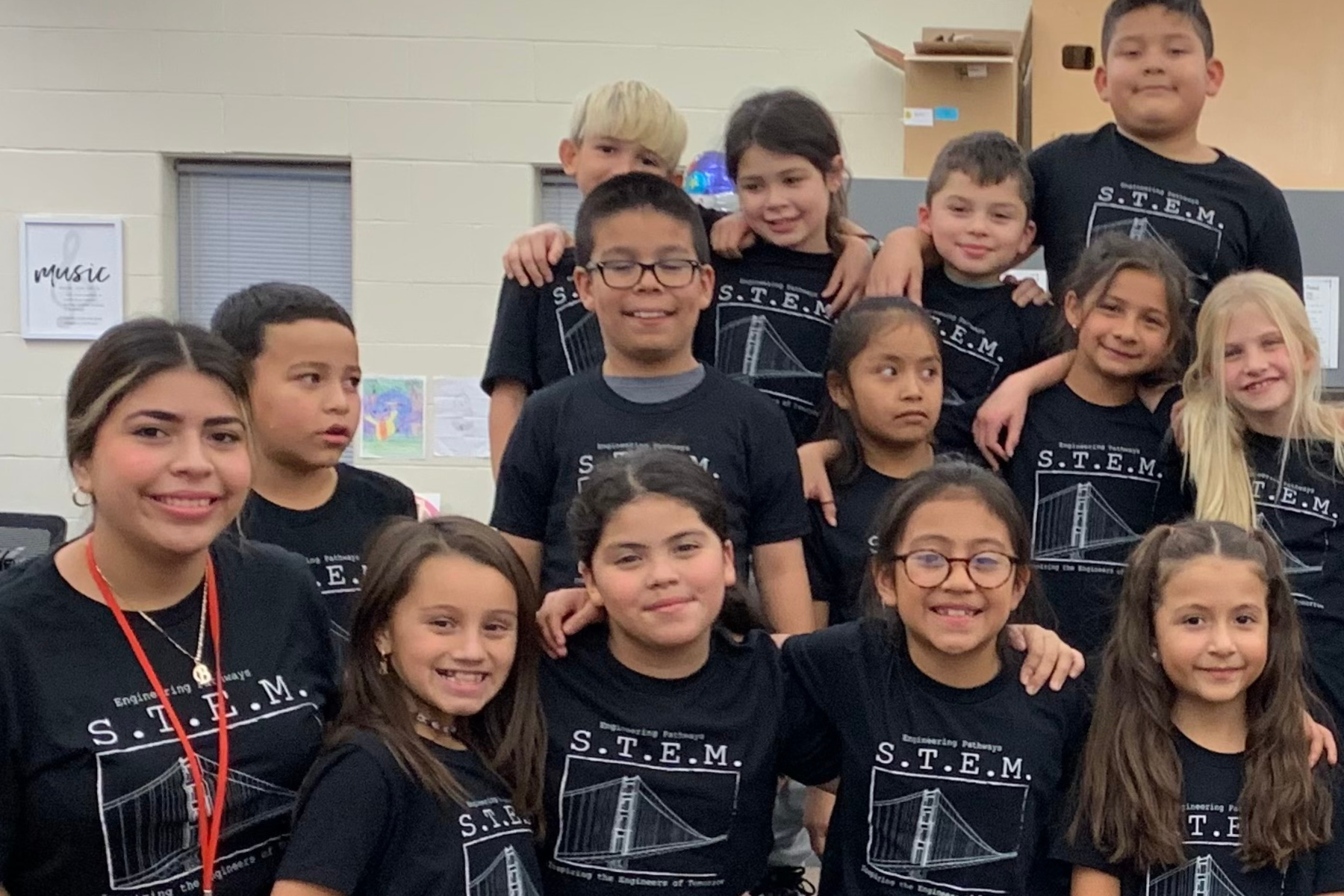
The Engineering Pathway Project is shaping the future of STEM by igniting a passion for discovery and innovation in students across Nebraska. Through engaging hands-on projects, mentorship, and opportunities to explore real-world applications, this project is more than an educational initiative—it’s a movement to inspire and empower the next generation of engineers, scientists, and leaders.
Beyond School Bells, an initiative of Nebraska Children and Families Foundation and a statewide public-private partnership dedicated to fostering sustainable, high-quality school-community collaborations, teamed up with the Peter Kiewit Foundation to launch the Engineering Pathway Project in the summer of 2023. The project is designed to spark and maintain student interest in high-demand careers through connected learning pathways from elementary through high school. At its core, the project cultivates an engineering mindset in students while prioritizing outreach to girls, rural youth, and others who have not traditionally considered STEM as a career.
Students at younger ages engage with fun STEM activities, which they build on in subsequent phases. High school and college students lead the clubs, providing mentorship and fostering STEM identity among participants. The high school and college club leaders also receive near-peer mentorship and guidance on how to lead engineering activities from college students at UNL majoring in STEM fields. As students progress, they gain exposure to educational and career opportunities, including scholarships such as the Peter Kiewit Foundation Engineering Academy Scholarships. Family engagement events further connect communities by showcasing student activities and raising awareness of future pathways.
Highlights of the project include:
- Interconnected, Near-Peer Learning: Elementary and middle school clubs are led by high school students with support from staff and mentorship from near-peer college students.
- Family Engagement: Events showcase student activities and raise awareness of future pathways, including scholarships.
- Community Connections: Collaborations across K-12 schools, community colleges, local businesses, and industries build STEM identity and career awareness.
The project’s structure—building interconnected learning experiences across grade levels—perfectly fits the afterschool setting. Afterschool programs offer flexibility and dedicated time needed for hands-on STEM exploration and foster a collaborative environment where creativity, curiosity, and experimentation cam thrive in a safe and supportive place.

Becoming a Role Model Through the Engineering Pathway Project
One student benefiting from this project is Britney Alarcon-Panzi, a senior at Crete Public Schools. Recognized for her leadership potential, Britney was invited to join the Engineering Pathway Project as a near-peer mentor by Stacy Shepherd, Site Coordinator for Cardinal Community Learning Centers, the afterschool program in Crete. Britney facilitates hands-on engineering lessons for third graders, bringing STEM concepts to life with creativity and interactive learning. From teaching about fossils to showcasing women in STEM, she tailors her material to captivate her young audience.
“She’s a natural leader with a positive attitude,” notes Shepherd. “The students are always excited to interact with Britney. She connects with them through positive interactions, thoughtful questions, and active listening.”

Through the project, Britney is also connected with mentors from the University of Nebraska—Lincoln, including Ysabelle Gilseth, a chemical engineering major, and Valori Olson, an architecture major. The three work together on lesson plans and bounce ideas back and forth on how to make the curriculum engaging for their students.
Gilseth and Olson value their roles as mentors, seeing it as an opportunity to give back. “Growing up with an interest in STEM hasn’t always been straightforward,” Gilseth shares. “Looking back, I think what would have been most valuable for me would have been to have a mentor that I could identify with.”
Olson adds, “I would have loved to be a part of projects like this when I was an elementary student. I am glad that I’m in a position to help others explore STEM [and] answer any questions they may have.”

Together, the team reflects on the challenges of navigating STEM fields and the important role of mentorship. Gilseth notes, “As a woman in a mostly male field, it can be challenging to feel represented and supported. Mentorship is critical in building confidence and resilience.”
Initially dreaming of becoming a teacher, Britney’s aspirations shifted after taking biology and engineering classes in high school. Her interest in medicine began as she watched her mother navigate health challenges. “I’ve always been told I’m creative, and when I learned about biomedical engineering, it just clicked—combining science, creativity, and technology to create devices that can help people.”
“I always knew I wanted to help people,” Britney shares. “The Engineering Pathway Project has made me more confident in pursuing what I want to do.”
Leading lessons, collaborating with mentors, and overcoming challenges in the Engineering Pathway Project has reinforced her dream of becoming a biomedical engineer and her growth didn’t stop there. “I’ve learned to step up and use my voice,” she explains. “Good leaders listen as much as they speak. I take time to understand what the kids want to learn and incorporate their ideas into the lessons. It’s made me a better leader.”

“It’s rewarding to see Britney’s communication and problem-solving skills grow,” Gilseth shares. “She’s passionate and invested in the project, which makes her an excellent role model for younger students.”
A Lasting Impact
Beyond Britney’s journey, the Engineering Pathway Project’s broader mission is to empower students across Nebraska in engineering and in STEM more generally. Britney Alarcon-Panzi’s story is one example of how this project shapes futures and impacts STEM education and beyond. By fostering creativity, collaboration, and curiosity, the Engineering Pathway Project is supporting the next generation of engineers and leaders—students ready to innovate, inspire, and make a difference. It’s one more way that Beyond School Bells is helping prepare our kids for tomorrow’s jobs and connecting them with opportunities that will encourage them to stay in Nebraska, increase their earning potential, and build a prosperous economy for all of us.
Beyond School Bells is an initiative of Nebraska Children and Families Foundation. To learn more about this work, visit www.beyondschoolbells.org.
© 2025 Nebraska Children and Families Foundation. All rights reserved.

Nebraska Children’s mission is to create positive change for Nebraska’s children through community engagement.


 Growing the Good Life
Leave a comment