Shawna Rischling has been an early childhood educator in Alliance, Nebraska, for 22 years. She seems nonchalant as she describes the work she has done anchoring Circle of Security Parenting (COSP) in her community. Even when she jokes about becoming fast at dodging a young boy who routinely bit her and left bruises on her arm, she is calm and matter of fact. It’s not the kind of thing you think of when you think of cute toddlers, but it’s the kind of behavior that early childhood educators report as making their jobs harder.
Shawna first became aware of COSP through her teaching in a preschool classroom for the Alliance Public School system. Her program is funded by Sixpence, which requires programs to serve at-risk children in the community, and the initiative told her of a new training in COSP. Circle of Security trains parents and other caregivers in developing strong bonds that give their children the security and confidence to explore, learn, grow, and build positive relationships.
Since COSP first came to Nebraska, it has been a natural fit for the work Rooted in Relationships, a Nebraska Children and Families Foundation initiative, does in working with early childhood mental health. Rooted has worked in collaboration with several partners to function as a central hub for COSP because the program lays the groundwork for the healthy early childhood mental health that is central to Rooted’s work.
Early COSP training offered by the collaborative had a profound impact on Rischling, and she often talked about it at home. One day she decided to try it in her classroom. Another young boy who hit, kicked, and screamed was sitting on the floor one day when another child took away a toy, which resulted in, as Rischling puts it, “a major meltdown.” She said that usually she would have sent him out of the classroom with an aide, but this time she decided to “try the whole ‘being with’ approach” she’d learned in her training.
“I sat with him and if he’d let me hold him I would. If not, I would just wait and say, ‘I’ll wait for you,” she says. She continued to work with him, and, according to her, “one day, he screamed at me, ‘why are you doing this?’ and I said, ‘I love you too much to let you behave like this.’” After that, she said it was like a light bulb came on in him. “Once he realized that I truly did care and I was there for him, our relationship was totally different.” Since then, Rischling started incorporating COStheories into her classroom, especially with children who had challenging behaviors, and she says she was “blown away” by the results.
From then on, Rischling became a proponent of COSP not just for the work she was doing but also for the Alliance community. Sami Bradley, Vice President of Early Childhood Mental Health and Director of Rooted in Relationships, points out that Rischling was one of the original COSP facilitators in Nebraska. When a new enhancement to the original program was offered making it more applicable to early care professionals, COS-Classroom (COSC), Rischling again took the lead in her community and went through Tier 1 training to become a facilitator and then Tier 2 training to become a coach as well. Rischling says the new Classroom training built off of the original 8-week video series to add activities specific to teachers.
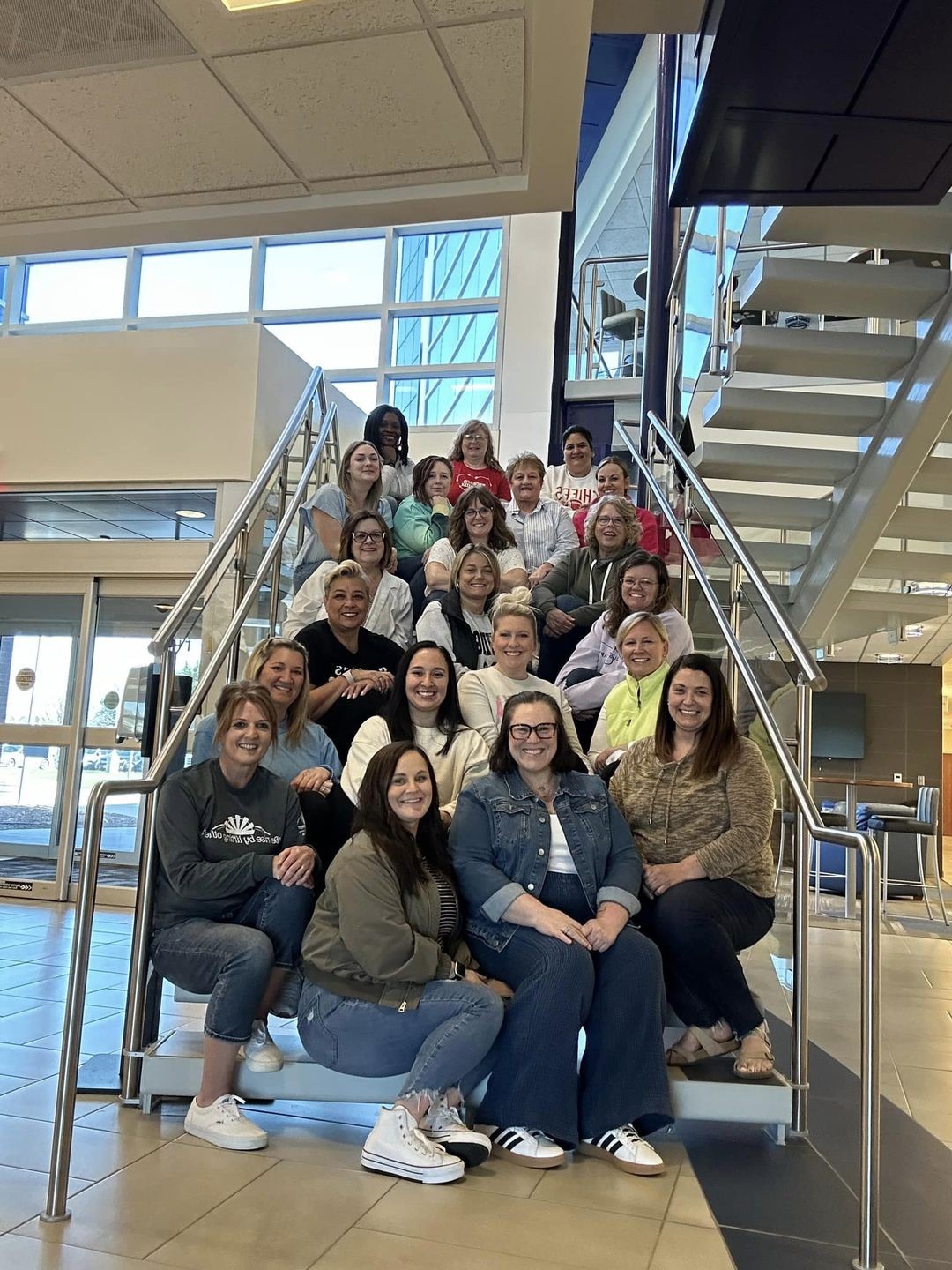
Bradley says that “Shawna has been perfect in that role” as the COS advocate for Alliance. “She has taken advantage of every opportunity to continue her own development.” In fact, Rooted was able to find funding to train Rischling as a COS coach. It was from such dedication that something innovative happened for Alliance. The principal who worked for the school where Rischling was the Preschool teacher, came to her and said he wanted to see COSC training for all his teachers up to 2nd Grade. Bradley says that Emerson Elementary thus became the first known school system in Nebraska where every teacher from preschool to 2nd grade was trained in COSC, including not only teachers but the para-professionals who assist them. Brenda Mills, who took over as principal at Emerson in 2021, also embraced COSC training for her faculty and went a step further, inviting Rischling to coach them in their classrooms. The result has been approximately 50-60 professionals trained at the school and private childcare programs in Alliance.
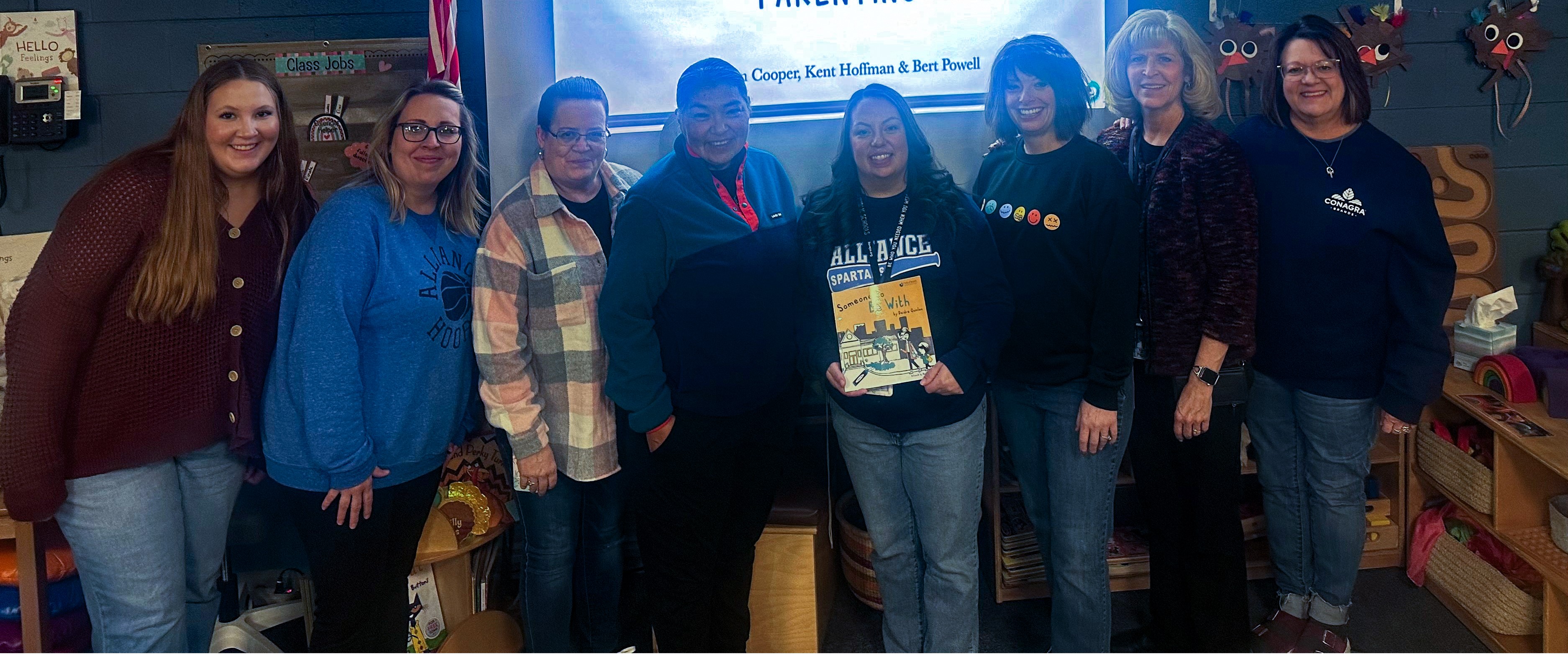
An added factor influencing Rischling’s drive to provide COS to parents, educators, and childcare providers in Alliance is her participation in the Nebraska Early Childhood Workforce Leadership Cadre through the Buffett Early Childhood Institute. Participation in the Cadre requires members to implement an Impact Project in their communities. Rischling’s passion for COS and the positive results that she has witnessed through the attachment-based program made Circle a clear choice.
Bradley calls the work the Alliance system has done “unique” and says, “having Shawna in there as a trained coach and then having an administration that is willing to support all theteachers getting trained, that has made COSC a success for the community.” For her part, Rischling applauds Rooted’s role in bringing COS to the state. “Sami (Bradley) truly is phenomenal,” she says of the work being done to bring Circle of Security to Nebraska. She adds, “I wouldn’t be where I am with Circle of Security without everything she’s done.”
Bradley is quick to point out that COS has been a collaborative effort of multiple organizations and initiatives across the state. Through partnerships, more than 300 individuals have been trained as facilitators of COSP, with 65 of them completing the additional training required to facilitate COSC. Rooted in Relationships continues to evaluate COS programs and ensure the fidelity of the program and have even been able to procure stipends for educators who otherwise would not be paid for the 12-15 hours of the valuable time they would have to devote to the training.
Rischling calls COSP a relationship approach rather than a behavioral approach. She says, “it goes hand-in-hand; you have improved relationships, you’re going to have improved behavior.” Rooted in Relationships and its partners then are joining hands with local communities to provide innovative trainings that promote healthy and positive behaviors for the children they serve.
Learn more about Rooted in Relationships

Nebraska Children’s mission is to create positive change for Nebraska’s children through community engagement.


 Growing the Good Life
Leave a comment