
When Rooted in Relationships brought Pyramid Model training to South Omaha, Ana Yumul says, “my first reaction was, no, no thank you. This is not for me.” After all, the training program is a 3-year commitment and requires letting strangers into your educational environment to observe you, a process that can seem daunting. But it’s more than that.
In the largely Spanish-speaking area of Omaha, some childcare providers are bilingual, while some speak only Spanish. When Rooted, a Nebraska Children and Families Foundation initiative, came to South Omaha, it was not only offering training, but also asking the local community to trust a system that can be alienating. Sonia Gonzales, Community Navigator for the Learning Community of Douglas and Sarpy Counties, who partners with Rooted through One World Community Health Center, says, “providers want to learn more but there is the barrier of the language.” She goes on to say, “taking the training in English, our local providers wouldn’t have grasped it as well. They might have dropped out half way because it was too hard.”
Rooted’s answer was what Stacy Scholten, Assistant Vice President of Early Childhood Mental Health for Nebraska Children and Rooted Coordinator for South Omaha, calls the “neighborhood approach.” Rooted in Relationships was initially designed for rural communities, she explains. Omaha was just too big for that. Instead, Rooted examined data in 2020 and found that the South Omaha zipcode had no licensed preschools. The few existing public preschools could not adequately meet the community’s needs.
During focus groups in 2021, families in South Omaha expressed their concerns about their children’s readiness for kindergarten, their preparation for public school, and were also unsure that existing programs were able to adequately address the social-emotional development of their kids. Rooted met with early childhood educators and other area representatives to discuss needs and to plan action. Scholten says that all but one educator spoke Spanish, but that there weren’t professional development opportunities for early childhood educators in the language.
That’s why Rooted offered the training entirely in Spanish, translated materials and resources, and emphasized a neighborhood approach that encouraged community ownership of the work being done. Scholten says they held planning meetings and provider collaboration meetings in Spanish, as well as conducting training and coaching in Spanish. And because the Rooted’s name didn’t translate well into Spanish, they instead collaborated with the local group to call the project, Cultivando Generaciones Futuras.
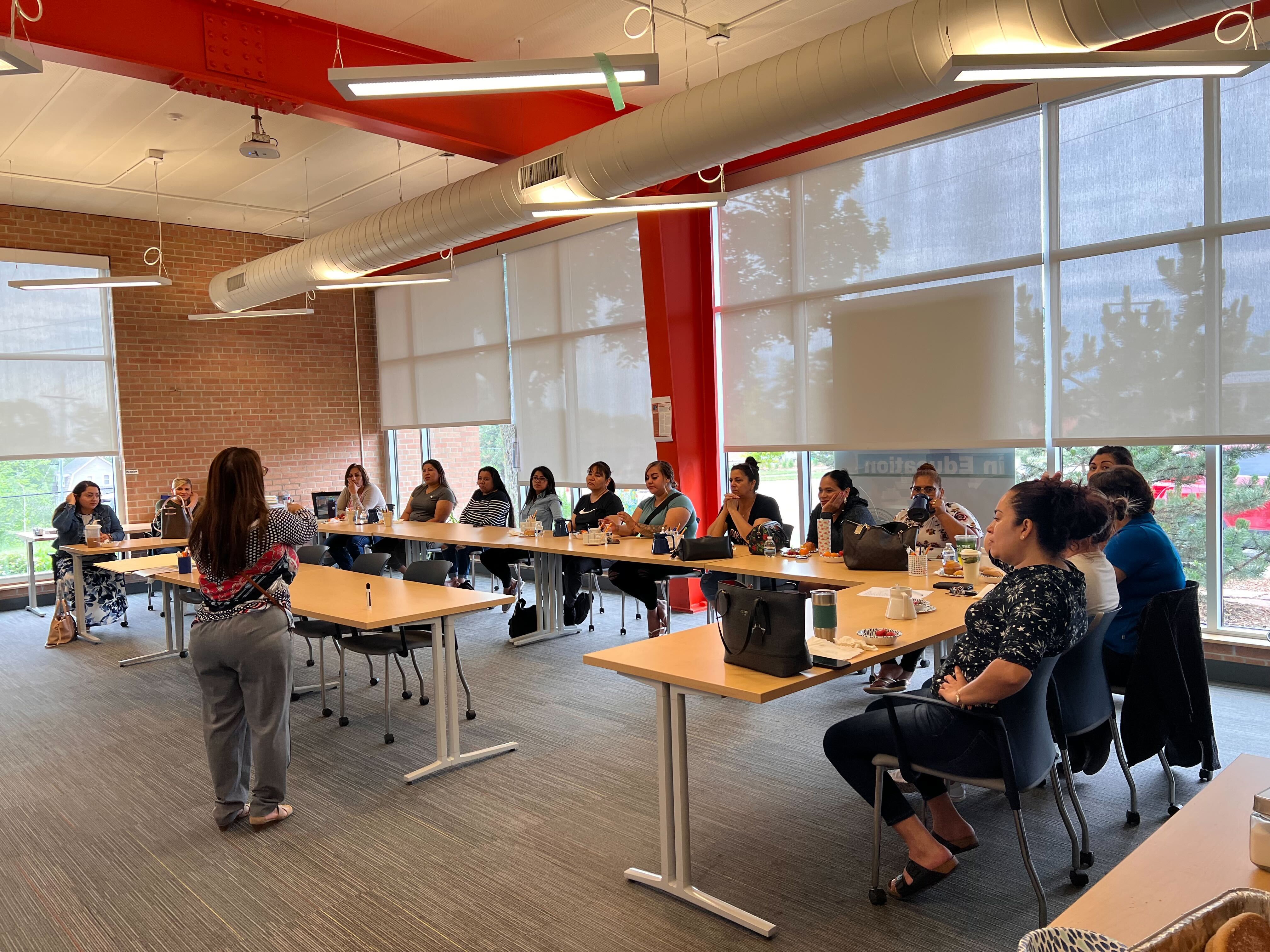
The training, which was hosted at the One World Learning Community Center, meant, according to Gonzales, that providers did not have to go outside their own community to find resources or help. “It was in the heart of their home,” she said. Furthermore, she added, “it made them feel like they are important.”
The approach also prompted an eager response from the community. One doctoral student who was studying child psychology at University of Nebraska Lincoln but who grew up in South Omaha was so excited by the opportunity that she drove from Lincoln to Omaha to coach local providers in Spanish. Scholten said the localized approach was successful beyond what they could have imagined. “There’s more in our communities than what we realize. When we’re willing to step out of our networks or comfort zone and be a little uncomfortable, we’re able to find more resources than we knew were there,” she said.
Most of the 15 educators who are part of the initial Pyramid Model training cohort are soon to finish (one had health issues and one moved out of state). Among them, Yumul. She says that she is thankful that she got chosen and that, despite initial hesitation, decided to accept. She points out that she learned vital skills for how to approach the kids and that she had a coach throughout the entire process. In fact, she celebrates the partnership with the coaches, the connection to the community, and the closeness with the parents fostered by Futuras training. She says, “if you don’t have that partnership with the parent, you’re not going to have a successful outcome with the child.”
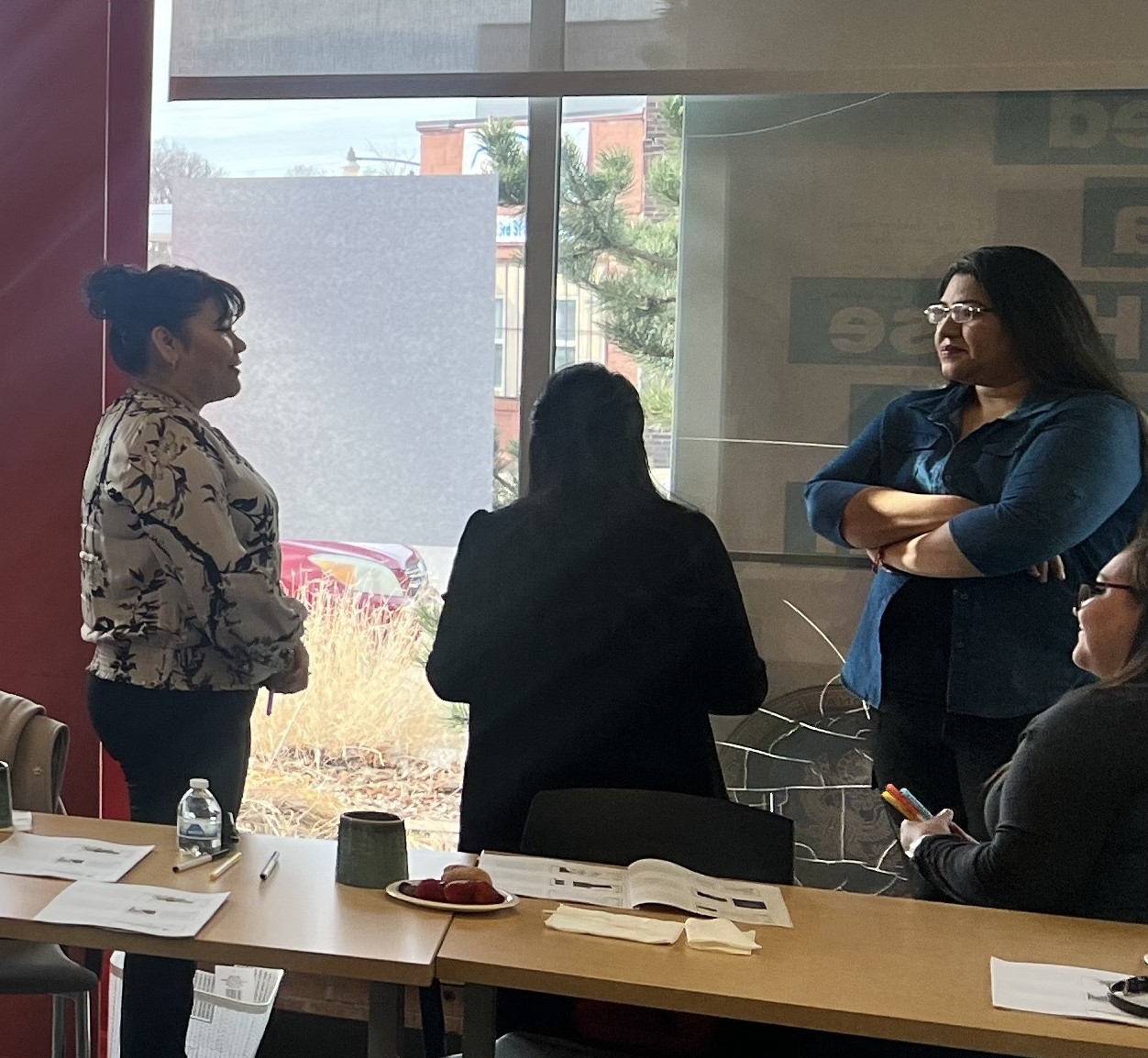
To illustrate, Yumul tells about a child who had something going on behaviorally that the parents weren’t ready to accept. After discussing what was happening with Futuras coaches, Yumul took the coaching advice to meet with the parents, to begin with positives, and then slowly introduce the topic of the challenging behavior. She says that Rooted in Relationships provided her with the tools to help that child. “Whatever happens at home, you make sure to tell them this is a safe and loving environment. It’s safe for you to be here and tell me what’s going on,” she explains.
Yumul also believes it has been important to have no-cost resources available for parents in her program and in the community. She says that having parenting classes available has been important to families and that a lot of parents have attended. The outcome for her: parents “look at my program differently; they respect me as a professional,” she says.
This is an idea that Gonzales reiterates, “providers feel more qualified. Parents see this and are reassured.” She offers the example of a parent who reached out to a provider to ask what she had done in her classroom because the parent wanted to pass on tips to her child’s kindergarten teacher.
Gonzales says that Futuras work has been so successful in South Omaha they’ve created their own providers association. It has opened doors to other grants and opportunities they might not have otherwise heard of, she says, adding, “they’re more comfortable reaching out to see what other opportunities are available in Spanish.”
The clearest indicator of the success of Futuras in South Omaha has been the response to the first round of training and the reaction to the new round. Gonzales says that participants from the initial training have said “nothing but great things.” When the new round of Pyramid Model training was announced, she didn’t have to do any promotion. Word of mouth has filled all 16 available slots and has left the Learning Center with a 12-person waiting list.
Scholten says the neighborhood approach has really paid off because of the commitment involved, including organizations, coaches, and providers. She said, for example, that one of the Learning Community staff called busy providers and filled in applications over the phone so that they wouldn’t miss out on the opportunity for Futuras training. She also said she appreciated Gonzales’s “willingness to jump right in” when Gonzales had to join the 3-year Rooted process half way through. “She (Gonzales) has been really important in staying on top of data collection, keeping coaches on track, organizing, and building relationships with providers,” Scholten said.
The neighborhood approach has led to greater connection among early childhood educators in South Omaha. Providers have, according to both Scholten and Gonzales, been excited to come together with others who have similar backgrounds and experiences and share camaraderie. By building that community on a shared experience of Spanish-speaking professional development, Scholten says providers are seeing the impact they have. Whereas they previously saw themselves as solely caregivers, they now see “they’re establishing the education of our future doctors, lawyers, construction workers, and so forth,” Scholten emphasizes. They’re not just babysitters. They’re being recognized for their expertise and parents are responding well to that renewed sense of expertise.
The early childhood education community Rooted in Relationships has helped build has laid the framework for Spanish-speaking areas around the state. The materials and resources are translated, the training in Spanish is ready to go. All that is left is to find those community builders within the next neighborhood who are willing to take that first step like Ana Yumul.
Learn more about Rooted in Relationships

Nebraska Children’s mission is to create positive change for Nebraska’s children through community engagement.


 Growing the Good Life
Leave a comment